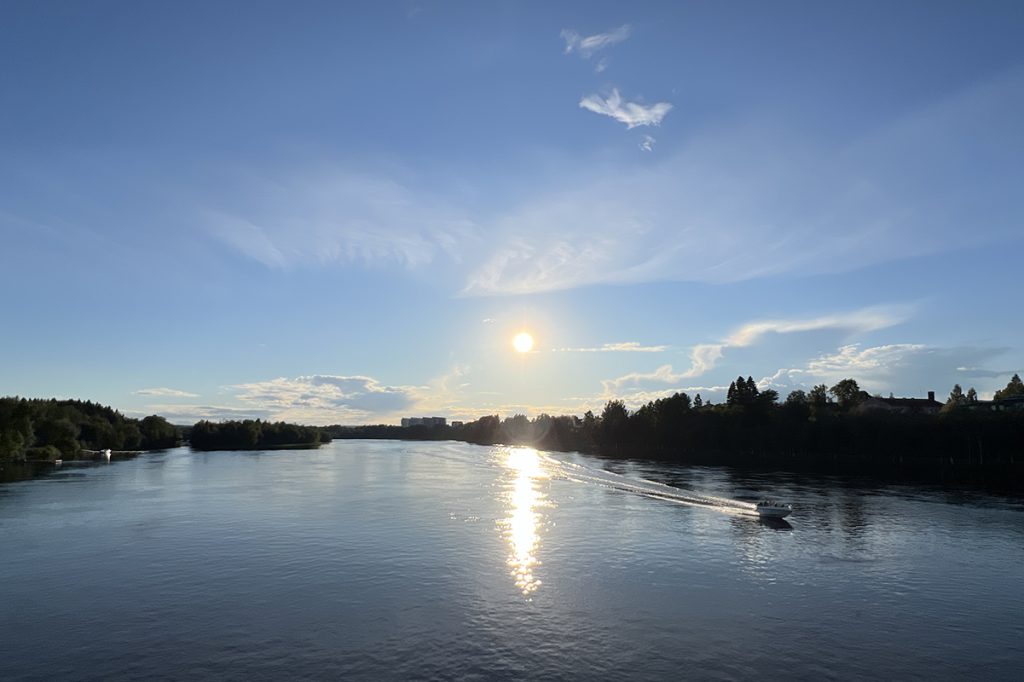
Midnight Sun Route – your holiday adventure
Visit Northern Scandinavia to experience the freedom of the open road on an unforgettable bike packing adventure – a self-guided tour through the heart of Swedish Lapland and Norwegian Helgeland.
Cycle the same route as the Midnight Sun Randonnée in your own pace and stay in a handpicked selection of charming lodges, local hotels, and riverside camps – some of which are also checkpoints in the event – each offering summer activities, local cuisine and authentic hospitality after a day on the bike.
Participants in Midnight Sun Randonnée cycle the entire course in three to four days. The Midnight Sun Route offers bike packing holidays with up to 15 days of cycling. If you are an experienced long-distance cyclist, you may want to combine stages and complete the route in about a week.
The Scandinavian climate will be part of your experience, so we recommend that you plan your holiday between the 19th of June and 23rd of August. This will give you the best chance of stable weather when crossing the Scandinavian mountain range.
In Sweden, Umeå and Vilhelmina have good public transport connections and are natural starting/finishing points for your bike packing holiday but alternative start/finish locations such as Granö or Lycksele are available and private transfer can be added to booked packages. Starting from Norway, Mo i Rana or Hattfjelldal are natural starting/finishing points.
Book a Start & Finish Hotel on the Midnight Sun Route – the base for your adventure!
Map of the Midnight Sun Route
All stages of the Midnight Sun Route
Day-by-Day Guide
Accommodation in Umeå
Book a Start & Finish Hotel
Climate & Weather
Nature & Fauna
Preparing for your adventure
Midnight Sun Route T-Shirt
Midnight Sun Route 1000 Cycling Jersey
Randonneurs Laponia Regular Cycling Jersey
Map of the Midnight Sun Route
Cycle is the original course for Midnight Sun Randonnée in your own pace. Stay at the same lodges and hotels as the cyclists in the event. Take time to visit natural and cultural attractions; and enjoy summer activities and local cuisine along the way. If you don’t have time to travel the whole route then start from Vilhelmina or Hattfjelldal to focus on the mountainous stages.
All stages of the Midnight Sun Route
Here are the 15 stages that make up the Midnight Sun Route. Add or subtract stages depending on the length of your holiday. Start your trip from a Start & Finish hotel where you can leave your luggage or car when out on your ride.
To help you decide how many days you think that you may need to complete the Midnight Sun Route we’ve borrowed the nomenclature of French randonneuring culture to describe three categories of cyclists. The first category of cyclists we describe as ‘tourists’. In randonneuring, tourists are cyclists that have abandoned an event but continue cycling on the course ”outside competition”. For ‘tourists’ time and speed is not important and they will make time for other activities during their day, such as sightseeing or a visit to a museum or natural attraction. The second category of cyclists are the ‘randonneurs’. These cyclists are focused on cycling and may only take breaks to refuel during the day. Randonneurs will have little time for sightseeing and may also cover more distance by spending an hour or two more on their bikes than ‘tourists’. The third category are the ‘stars’. These cyclists who are completely focused covering as many kilometres per day as possible. They will have little time for breaks and will push themselves to the limit every day; cycling well into the evening. These cyclists have the aim to complete the route as fast as possible.
Status of the roads
Update 2026-06-10: important update concerning the stage between Lycksele and Vilhelmina!
According to contractors carrying out resurfacing work on a 20-kilometre stretch of road 360 between Lycksele and Vilhelmina, the asphalt on at least 10 kilometres of the road will be removed, exposing a subbase consisting of coarse and fine crushed stone from the beginning of June. For rider safety, please continue on road E12 after the control in Lycksele. Follow the Ume River 39 km to the village of Medelås. Then turn left onto road 964 to Björkberg. This is now a paved road since 2022. The roadworks on this stage may continue during the whole summer of 2026.
Midnight Sun Route – Tourist
The category of cyclists we describe as ‘tourists’ will average between 80–120 km per day, which gives them time for activities at their destinations during the afternoon or evening.
Here’s a timetable for the Midnight Sun Route keeping a pace of 80–120 km per day, which starts and ends in Umeå. We recommend that you mix in a few rest days in your final plan. The table also displays Start & Finish hotels on the route where you can leave your car and luggage when out on your trip.
| Stage | From | Accommodation | To | Book | Service | Km | Elev. | Route |
|---|---|---|---|---|---|---|---|---|
| 1 | Umeå | Scandic Plaza Umeå | Granö | Granö Beckasin |  | 80,0 | 875 |  |
| 2 | Granö | Granö Beckasin | Lycksele | Hotell Lappland |  | 53,3 | 566 | |
| 3 | Lycksele | Hotell Lappland | Vilhelmina | Hotell Wilhelmina | | 118,3 | 2087 | |
| 4 | Vilhelmina | Hotell Wilhelmina | Dikanäs | Kvarnforsens Camping |  | 101,7 | 1330 | |
| 5 | Dikanäs | Kvarnforsens Camping | Kittelfjäll | STF Kittelfjäll Hostel | | 29,0 | 375 | |
| 6 | Kittelfjäll | STF Kittelfjäll Hotel | Hattfjelldal | Hattfjelldal Hotell | | 98,9 | 1045 | |
| 7 | Hattfjelldal | Hattfjelldal Hotell | Mo i Rana | Scandic Meyergården | | 111,8 | 1450 | |
| 8 | Mo i Rana | Scandic Meyergården | Krokstranda | Krokstrand Fjellpark |  | 62,2 | 1007 | |
| 9 | Krokstranda | Krokstrand Fjellpark | Storjord | Storjord Hotel | | 53,4 | 725 | |
| 10 | Storjord | Storjord Hotel | Vuoggatjålme | Vuoggatjålme | | 64,1 | 1087 | |
| 11 | Vuoggatjålme | Vuoggatjålme | Arjeplog | Hornavan Hotell | | 104,7 | 912 | |
| 12 | Arjeplog | Hornavan Hotell | Sorsele | Sorsele River Hotel | | 90,9 | 741 | |
| 13 | Sorsele | Sorsele River Hotel | Björksele | Björksele B&B | | 87,5 | 931 | |
| 14 | Björksele | Björksele B&B | Åmsele | Åmsele Camping | | 70,5 | 667 | |
| 15 | Åmsele | Åmsele Camping | Umeå | Scandic Plaza Umeå | | 107,0 | 1025 | |
Midnight Sun Route – Randonneur
Fitness levels may differ for the category of cyclists we describe as ‘randonneurs’ but their focus is mainly on cycling and the extra distance they gain over ‘tourists’ may be from either increased cycling speed or increased time on their bike. Randonneurs will average 100–160 km per day.
Here’s is an example of a timetable with focus on longer stages which starts and ends in Umeå. It combines stages to shorten the trip by six days. On some stages stops are only made for lunch at some hotels. Add at least a couple of rest days to your plan.
| Stage | From | Accommodation | To | Book | Service | Km | Elev. | Route |
|---|---|---|---|---|---|---|---|---|
| 1 | Umeå | Scandic Plaza Umeå | Granö | Granö Beckasin |  | - | - | |
| 1 | Granö | - | Lycksele | Hotell Lappland | | 133,3 | 1441 | |
| 2 | Lycksele | Hotell Lappland | Vilhelmina | Hotell Wilhelmina | | 118,3 | 2087 | |
| 3 | Vilhelmina | Hotell Wilhelmina | - | - | - | - | - | |
| 3 | - | - | Kittelfjäll | STF Kittelfjäll Hostel | | 129,5 | 1677 | |
| 4 | Kittelfjäll | STF Kittelfjäll Hostel | Hattfjelldal | Hattfjelldal Hotell | | 98,9 | 1045 | |
| 5 | Hattfjelldal | Hattfjelldal Hotell | Mo i Rana | Scandic Meyergården | | - | - | |
| 5 | Mo i Rana | - | Krokstranda | Krokstrand Fjellpark | | 174,0 | 2 457 | |
| 6 | Krokstranda | Krokstrand Fjellpark | Arctic Circe Center |  | - | - | |
|
| 6 | Arctic Circe Center | - | Vuoggatjålme | Vuoggatjålme | | 112,4 | 1086 | |
| 7 | Vuoggatjålme | Vuoggatjålme | Arjeplog | Hornavan Hotell | | - | - | |
| 7 | Arjeplog | - | Sorsele | Sorsele River Hotel | | 195,6 | 1653 | |
| 8 | Sorsele | Sorsele River Hotel | - | - | - | - | - | |
| 8 | - | - | Åmsele | Åmsele Camping | | 158,0 | 1598 | |
| 9 | Åmsele | Åmsele Camping | Umeå | Scandic Plaza Umeå | | 107,0 | 1025 | |
As for the ‘stars’, well, the sky is the limit for them and so they will cycle as many kilometres per days as they can; and that is a number these cyclists will decide during each day, depending on how they feel.
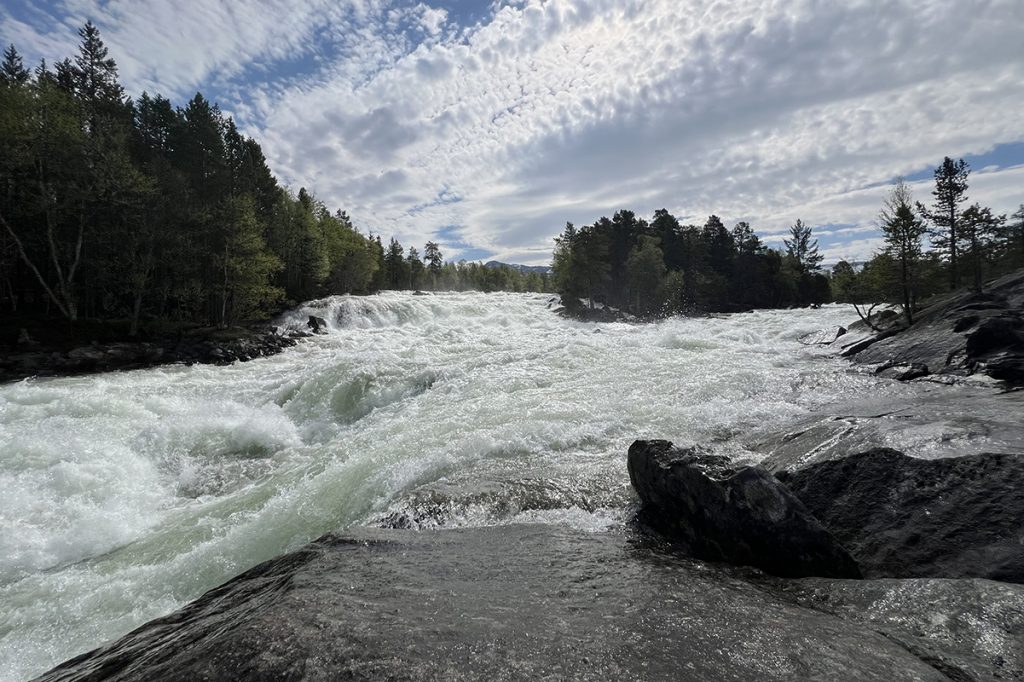
Day-by-Day Guide
This trip is more than a bike ride, it’s a journey through the heart of Northern Scandinavia. Discover the wild beauty, warm hospitality, culture and living heritage of the region – a bike packing holiday for those seeking freedom, solitude and to experience and connect with nature.
Day 1: Umeå (start from a choice of hotels) → Hotell Granö Beckasin
Distance: 80 km. Elevation gain: 875 m. Difficulty: Easy. Traffic: Moderate.
Terrain: mostly flat with a few rolling hills; wide roads with some traffic near villages.
Accommodation: Hotell Granö Beckasin by Ume River – eco-lodge with modern rooms and cabins. Breakfast included. Full-service restaurant with local seasonal dishes. Sauna and hot tub. Bike storage and drying facilities.
Attractions: Sjungaregården – a 18th-century farm turned into a culture centre.
Activities: guided nature walks, canoeing and rafting on Ume River.
Day 2: Hotell Granö Beckasin → Hotell Lappland
Distance: 53,3 km. Elevation gain: 566 m. Difficulty: Moderate. Traffic: Light – Moderate.
Terrain: mostly flat, mixed farmland and forests; gentle rolling hills.
Accommodation: Hotell Lappland by Ume River – a variety of room types from single rooms to spacious suites. Breakfast included. Modern restaurant serving local dishes with locally sourced ingredients. Sauna and wellness area.
Attractions: Lycksele Zoo – animals native to Scandinavia. Gammplatsen – open-Air Museum with historical buildings from the 18th and 19th century. The Forest & Sámi Museum – exhibits forestry history and Sámi culture.
Activities: Ansia Water Park, river side walks, fishing.
Day 3: Hotell Lappland → Hotell Wilhelmina
Distance: 118,3 km. Elevation gain: 2087 m. Difficulty: Challenging (long stage). Traffic: Minimal.
Terrain: gentle winding roads with long, flat climbs; mostly boreal forests and marshlands with the occasional village and farm.
Accommodation: Hotell Wilhelmina overlooking Lake Volgsjö – a range of rooms from single to full suite. Breakfast included. Cozy lounge. Restaurant with local cuisine. Sauna and hot tub.
Attractions: Vilhelmina Church and church-village – traditional wooden cottages and Sámi heritage from the late 1700s. Vilhelmina museum – collections coverings local history and Sámi culture.
Activities: swimming, disc golf and outdoor gym at Lake Baksjön, fishing.
Day 4: Hotell Wilhelmina → Kvarnforsens Camping
Distance: 101,7 km. Elevation gain: 1330 m. Difficulty: Challenging. Traffic: Minimal.
Terrain: lakeside road until the village Stalon; then major climbs and descents towards Dikanäs.
Accommodation: Kvarnforsens Camping – riverside cabins. Barbecue area.
Attractions: Dikanäs Motorcycle Museum – exhibits about 40 motorcycles ranging from war‑veteran bikes to Harley Davidsons.
Activities: evening fishing in Dalsån, riverside barbecue, forest hikes.
Day 5: Hotell Wilhelmina → STF Kittelfjäll Hostel
Distance: 29,0 km. Elevation gain: 375 m. Difficulty: Moderate. Traffic: Minimal.
Terrain: winding road with smaller climbs; panoramic mountain views, mostly boreal forests and marshlands.
Accommodation: STF Kittelfjäll Hostel – comfortable mountain lodging with single to 4-bed rooms. Self-catering kitchen. Wood-fired sauna. Bike storage and drying facilities. Gourmet dinner at C & R Restaurant.
Activities: fly fishing, canoeing, via ferrata, hiking and mountain biking trails.
Day 6: STF Kittelfjäll Hostel → Hattfjelldal Hotell
Distance: 98,9 km. Elevation gain: 1045 m. Difficulty: Very Challenging. Traffic: Minimal.
Terrain: mountain road with narrow winding sections and steep climbs and descents. On Norwegian side, frost-damaged road with ravelled asphalt and transverse cracking.
Accommodation: Hattfjelldal Hotell – single and double rooms with panoramic view. Breakfast included. Sauna and jacuzzi. Restaurant with local dishes.
Attractions: Sijti Jarnge – Sámi Language & Culture Centre with exhibitions of Sámi handicraft.
Activities: hikes to peaks such as Hatten and Kjerringtinden, fishing for trout and char.
Day 7: Hattfjelldal Hotell → Scandic Meyergården
Distance: 111,8 km. Elevation gain: 1450 m. Difficulty: Challenging. Traffic: Minimal – Moderate.
Terrain: narrow, winding road along Lake Røssvatnet with continuous small inclines; later following Ranfjorden.
Accommodation: Scandic Meyergården – a central, comfortable hotel offering historic charm, modern amenities, and good dining in a restaurant with view of the Ranfjord.
Attractions: Moholmen Old Town – historic wooden buildings and the oldest preserved part of Mo i Rana. Rana Museum – local history, culture, and exhibitions about industry, WWII, and the region. Havmannen – a famous sculpture standing in the fjord, part of the Artscape Nordland project.
Activities: fishing, trail and fjord-side hikes.
Day 8: Dalselv Hotell → Krokstrand Fjellpark
Distance: 74,0 km. Elevation gain: 1119 m. Difficulty: Challenging. Traffic: Heavy – Moderate.
Terrain: fjord-side road changing to winding mountain road with long but moderate climbs.
Accommodation: Krokstrand Fjellpark – a variety of lodging: hotel‑rooms, holiday homes, cabins. Café and restaurant on site.
Attractions: Saltfjellet–Svartisen National Park – one of Norway’s largest glaciers, caves.
Activities: mini‑golf course, climbing park with zip‑lines, fishing, hiking.
Day 9: Krokstrand Fjellpark → Storjord Hotel
Distance: 53,4 km. Elevation gain: 725 m. Difficulty: Challenging – Moderate. Traffic: Moderate.
Terrain: exposed mountain road with long moderate climbs to Saltfjellet mountain plateau followed by long descent with scenic riverside sections to Junkerdal valley.
Accommodation: Storjord Hotel – family-run tradtional lodge. Comfortable rooms with mountain views. Homemade Norwegian cuisine highlighting traditional dishes with a modern touch. Sauna.
Attractions: Arctic Circle Centre, souvenir shop and cafeteria.
Activities: hiking to the waterfall Kjemåfossen or Junkerdalsura on well-marked trails with suspension bridges.
Day 10: Storjord Hotel → Vuoggatjålme
Distance: 64,1 km. Elevation gain: 1087 m. Difficulty: Very Challenging. Traffic: Light.
Terrain: initial long steep winding climb next to scenic Junkerdal gorge followed by exposed mountain road with long moderate climbs and descents.
Accommodation: Vuoggatjålme by Lake Vuoggatjålmjaure – mountain lodge with a range of cabins, and chalets with private saunas. Restaurant with local cuisine. Sauna.
Activities: helicopter fly and hike trips, canoeing, hiking on well‑marked trails such as Barkslingan and Utsikten, fishing.
Day 11: Vuoggatjålme → Hornavan Hotell
Distance: 104,7 km. Elevation gain: 912 m. Difficulty: Easy. Traffic: Light.
Terrain: lakeside road on open terrain followed by a few moderate climbs after the village Jäkkvik.
Accommodation: Hornavan Hotell by Lake Hornavan – modern hotel with a range of rooms from single rooms to luxury suites with private saunas. Sauna and relax area. Restaurant which emphasises local dishes and seasonal ingredients.
Attractions: Silver Museum – exhibiting the history and culture of the region, also housing a collection of silver pieces made by Sámi artisans.
Activities: boat rental and fishing.
Day 12: Hornavan Hotell → Sorsele River Hotel
Distance: 90,9 km. Elevation gain: 741 m. Difficulty: Easy. Traffic: Light – Moderate.
Terrain: mainly descending road through forests and rivers; long flat stretches with shallow climbs.
Accommodation: Sorsele River Hotel – modern hotel with a range of comfortable rooms, restaurant with local cuisine and panoramic window overlooking Vindel River, Cozy lounge. sauna, jacuzzi.
Attractions: Sorsele Hembygdsgårdsområde, heritage‑area with preserved historic buildings.
Activities: riverside walks, fishing.
Day 13: Sorsele Sorsele River Hotel → Björksele Bed & Breakfast
Distance: 87,5 km. Elevation gain: 931 m. Difficulty: Easy. Traffic: Moderate – Light.
Terrain: Mostly flat, riverside road with forest scenery.
Accommodation: Björksele B&B – stay with local hosts. Homemade breakfast.
Activities: walks along the Vindel River, fishing.
Day 14: Björksele Bed & Breakfast → Åmsele Camping
Distance: 70,5 km. Elevation gain: 667 m. Difficulty: Easy – Moderate. Traffic: Light – Moderate.
Terrain: riverside road with forest scenery, villages and farmland; mostly flat with gentle rolling hills.
Accommodation: Åmsele Camping – riverside cabins in various sizes. Sauna.
Attractions: Åmsele Church – wooden church from 19th century. Åmsele Mill – historic building with original machinery still in place.
Activities: tennis, boules, riverside barbecue, nature trails with rest huts, shelters and fishing.
Day 15: Åmsele Camping → Umeå
Distance: 107,0 km. Elevation gain: 1025 m. Difficulty: Moderate. Traffic: Light – Moderate.
Terrain: Mostly flat to slightly hilly terrain, farmland, forest, rivers. Busy sections after the village Vindeln.
Accommodation: Choice of hotels – Scandic Plaza, Clarion Umeå, U&Me Hotel or YMCA Hostel.
Attractions: Bildmuseet – contemporary art museum and visual culture centre. Västerbottens Museum – exhibits the region’s cultural heritage. Backens Church – oldest church building in the region, first built in 1500s. Klabböle Hydroelectric Power Station – built 1899, now a museum exhibiting a combination of historical artefacts.
Activities: celebrate the completion of your journey with a gourmet dinner at your hotel, after a relaxing sauna. Explore Umeås night life.
Highlights along the route
Västerbottens Museum – exhibits the region’s cultural heritage
Lycksele Zoo – animals native to Scandinavia
Vilhelmina Church Village – traditional wooden cottages and Sámi heritage
Kittelfjäll – hiking trails, fly fishing and mountain bike trails
Lake Røssvatnet – Norways second largest lake
Saltfjellet–Svartisen National Park – explore glaciers, waterfalls, and caves
Arctic Circle Centre – try a waffle in the cafeteria
Silver Museum, Arjeplog – Lapland’s cultural heart and Sámi silver treasures
Vindelälven River Valley – One of Europe’s last wild rivers, part of a UNESCO Biosphere Reserve

Accommodation in Umeå
If you’re starting your journey from Umea, you will find a wide choice of accommodation there. We suggest one of the hotels that also accommodate cyclists in the Midnight Sun Randonnée, for instance Umeå Scandic Plaza in the centre of Umeå where the event finishes. If you are staying at the hotel and arriving to Umeå by train
  or bus
  you will have a ten minute walk (850m) through the town centre to the hotel. If instead you’re flying to Umeå and arriving by airport shuttle
  you’ll have an eight minute walk (600m) to the hotel from the bus terminal at Vasaplan. If you’re driving to Umeå and staying at one of the hotels below we recommend the parking garage Parketten
  on Storgatan 47. The entrance to the Hotel U&Me
  is opposite Coop, in the same building as the Umeå culture centre Väven. Hotel Clarion
  is located further down the same street as Umeå Scandic Plaza. From the railwaystation it is only a short walk to the Norrland YMCA Hostel
  and the parking garage Järnvägsallén is situated nearby.
After you have assembled your bike at your hotel you will find air compressor pumps
 in the city centre, and a bike wash
  where you can clean your bike when returning from your journey. During your stay in Umeå we also suggest that you visit the french pâtisserie Laure’s Fika
  next to Umeå Central Station.

Book a Start & Finish Hotel
Book a Start & Finish Hotel on the Midnight Sun Route, which will be the base for your adventure. You can leave your car and luggage at this hotel. If you’re travelling by plane or train, these hotels will arrange transfer. The Start & Finish Hotel booking package consists of at least two hotel nights, including breakfast and two dinners, luggage storage and parking. Also a Midnight Sun Route t-shirt is included. The Midnight Sun Route is a self-guided adventure. You decide the length of your journey and how many stops you want to make on the way – the Start & Finish Hotel package also includes assistance and advice with your booking arrangements!
 Starting from Granö will shorten your trip by two stages. If you’re travelling by car it may be easier to leave your car in Granö than in Umeå. Make Hotell Granö Beckasin the base for your adventure.
Starting from Vilhelmina will shorten your trip by four stages and will focus your adventure on mountainous stages. Make Hotell Wilhelmina the base for your adventure.
Starting from Sorsele will shorten your trip by four stages and will focus your adventure on mountainous stages. Make Sorsele River Hotel the base for your adventure.
Starting from Granö will shorten your trip by two stages. If you’re travelling by car it may be easier to leave your car in Granö than in Umeå. Make Hotell Granö Beckasin the base for your adventure.
Starting from Vilhelmina will shorten your trip by four stages and will focus your adventure on mountainous stages. Make Hotell Wilhelmina the base for your adventure.
Starting from Sorsele will shorten your trip by four stages and will focus your adventure on mountainous stages. Make Sorsele River Hotel the base for your adventure.
 Also starting from Hattfjelldal in Norway will shorten your trip by four stages and will focus your adventure on mountainous stages. Make Hatfjelldal Hotel the base for your adventure.

Climate & Weather
Summer temperatures in the subarctic region of Scandinavia are ideal for cycling and the region’s 24-hour daylight conditions are both practical for a bike packing holiday and an local attraction in itself. Daytime temperatures on lowland terrain is normally around 15 – 20°C and may drop to 10 – 5°C at altitudes above the tree line. Night temperatures on low-lying terrain: 10 – 15°C during the summer. Above the tree line, night temperatures may fall to around 5°C.
The regional temperatures are cooler than Europe in general which is positive from a cyclists perspective, but in the Scandinavian mountain regions the weather is instead relatively unpredictable and may affect your holiday. Incoming weather fronts bringing rain from the Norwegian Sea may motivate one or two rest days during your trip. Due to the varying lengths of the stages, you can however compensate for lost days on the bike by combining stages later on during your holiday. Most hotels can be rebooked free of charge a day in advance. This booking policy can also be useful if you want to make spontaneous stops during your trip for sightseeing, guided excursions, fishing, spa treatments, etc. Read more about mountain weather och suitable raingear here.

Nature & Fauna
You will have a good chance of seeing moose, reindeer and foxes close to the road, especially in the evening and night. You may also see red deer and roe deer, and in rare cases wolverine, lynx or pine marten; perhaps even grey wolf or brown bear. On the mountain lakes you will find birds such as whooper swan, mute swan, and arctic loon. In farm meadows you may see common crane, Canada geese and greylag geese. In the forests you may see black woodpecker, great spotted woodpecker, common cuckoo, capercaillie and black grouse, but also birds of prey such as boreal owl. You also have a chance of seeing larger birds of prey such as golden eagle and rough-legged hawk. Above the tree line you may see rock ptarmigan. In Norway around Lake Røssvattnet, domestic sheep roam loose on the roads. Down by the sea you will perhaps see a white-tailed eagle soaring above the Ranfjord among arctic tern and several species of gulls.
The right of public access to the wilderness prevails in both Sweden and Norway, which means that it is permitted to both camp and swim in privately owned forests and lakes as long as you do not litter or destroy; or are in close vicinity to private homes (if so, ask permission first).
Experience endless forests, bustling river valleys and the fjords. Cross the snow-capped mountains of the Scandes and the Artic Circle. Ride through the crystal-clear lake district of Arjeplog and Sorsele and follow one of Europe’s last free-flowing rivers, the Vindel River, to the Gulf of Bothnia.
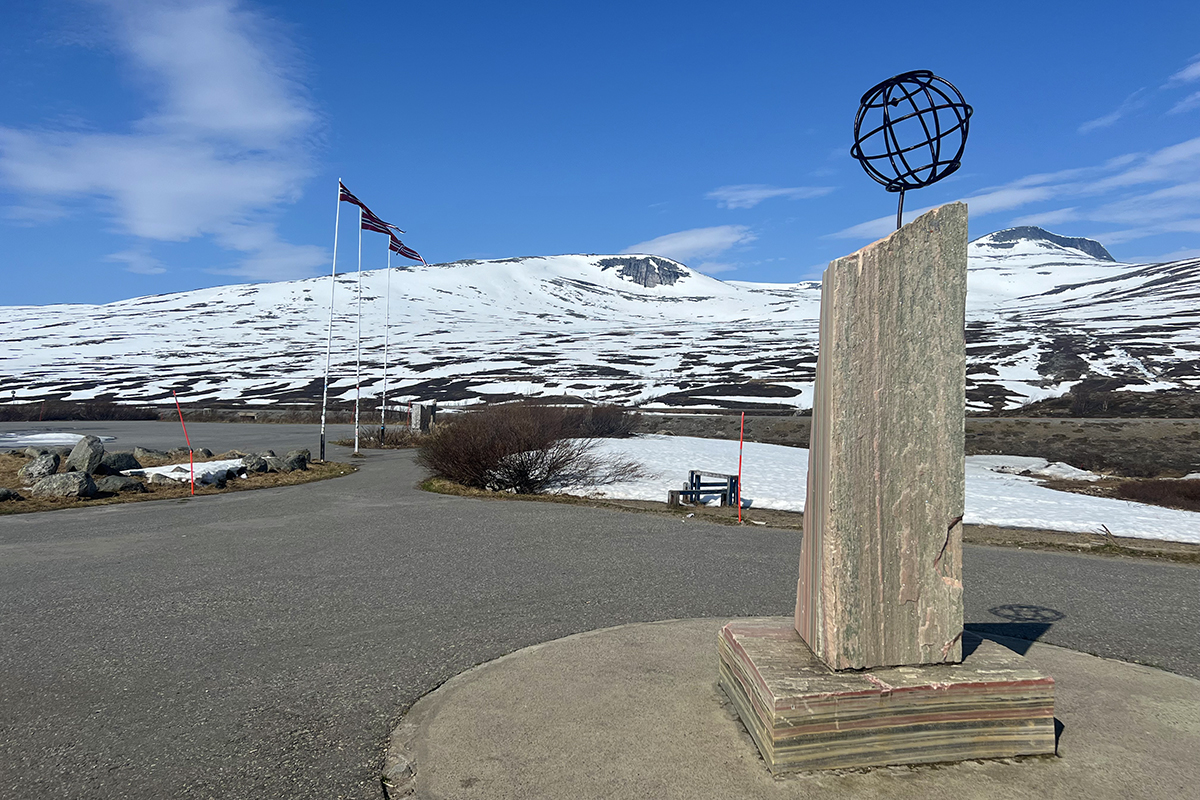
Preparing for your adventure
Bike and Equipment
Bike shops are few and far between on the Midnight Sun route. Make sure to have your bike serviced before you start your trip. If you’re starting from Umeå or Mo i Rana you will find excellent bike mechanics at Umeå Cykelsport or Sport1. Expect at least one or two days of rain on a two week ride and so waterproof bike bags such as Apidura, Ortlieb, Arkel, Roswheel, Pro Discover are recommended. Always carry extra inner tubes, a puncture repair kit, a chain breaker and quick link, basic tools and front and rear lights in your pack. If you’re cycling in June or July you’ll be cycling in 24 hour daylight conditions but lights are grateful to have in tunnels, on busy roads and also in fog and rainy weather. Also, don’t forget sun cream and chamois cream. As long as you’re on your bike mosquitoes won’t catch up to you but mosquito repellent may be good to have in the bag.
For international visitors outside the EU/EES a prepaid mobile solution is practical, Telia Prepaid. Cellular reception is for the most parts exellent along the route. See coverage maps: Telia Sweden. Telia Norway. In Sweden and Norway, the standard voltage is 230V. Sockets: type F Schuko (EE 7/4) and type C Europlug.
Weather-Appropriate Clothing
Include suitable and easy to reach rain gear in your pack for sudden weather changes. Heavy rain, high winds and even the occasional snow shower are not uncommon in the mountains during the summer. Insulated waterproof gloves and shoe covers are recommended since temperatures will drop quickly with rain. Use a layering principle with your clothing. A base layer of a moisture-wicking fabric such as merino wool will keep you warm, even when wet. A mid layer should provide insulation whilst also being breathable. The remote and open landscape of the mountains offer little protection so it is important that you carry a rain jacket in your pack that gives you full waterproof protection. As long as you’re warm and dry even a little rain may be enjoyable.
Hydration and Nutrition
If needed, the water from mountains streams is safe to drink if crystal clear. Restaurants and food stores are few and far between so always carry high-calorie, lightweight foods like nuts and energy bars.
First Aid and Communication
Remote areas may have long distances to medical help so carry a comprehensive first aid kit. Mobile coverage is as mentioned above very good along the route so whereever you are, you will almost certainly be able to make an emergency call if necessary. Keep someone informed about your destination and estimated arrival time on stages through sparsely populated areas.
Road Conditions
Excepting road works, all of the route is paved and for the most part in acceptable or excellent condition. Some roads are paved with rough and grippy chip-seal, others with smooth asphalt. Some sections of the mountain roads, especially in Norway, are frost-damaged with ravelled asphalt and transverse cracking of the road surface. Watch out for potholes and ruts on these roads. Larger tire dimensions and low tire pressures will reduce road vibrations but for the route as a whole, regular tires with dimensions 25-28 mm are sufficient.
Traffic Safety
There is also very little traffic on the route, except on the E6 in Norway which can be busy depending on the time of day. Watch out for camper vans and lorries on the E6. We recommend that you use reflective gear and a rear light for visibility on the E6. If you want to avoid traffic completely then travel the E6 during off-pick hours. On the smaller roads you may encounter moose and reindeer on the road, and even sheep along Lake Røssvatnet in Norway. Drivers in Scandinavia are generally very considerate and keep their distance when overtaking.
Physical Preparation – Required fitness level for 80–100 km stages
Endurance training: a moderately fit cyclist can manage 80 km per day on mostly flat terrain, but hilly and potentially windy routes demand above-average endurance and preparation. You should be able to comfortably ride at least 50 km in a moderate tempo in day to day training. Gradually increase this distance over time to build stamina. Many long-distance cyclists aim to train 3–5 times per week, combining long rides with strength and flexibility work.
Strength and hill training: many stages involve long climbs or rolling terrain. Incorporate hill repeats, interval training, and leg strength exercises (squats, lunges) to improve climbing ability.
Core and stability: a strong core reduces fatigue and improves bike handling over long distances. Include planks, back extensions, and other core exercises in your training. On long rides lower back and neck pain is common but can be avoided with regular weight training.
Bike handling skills: you should always be comfortable controlling your bike on roads with heavy traffic or in windy and wet conditions. Practice manoeuvring at home with your bike fully loaded.
Pacing and energy management: learn to pace yourself to avoid burnout. On 80–100 km days, riding at a sustainable pace is more important than speed. Include regular breaks for hydration and refuelling.
Recovery ability: your body should recover quickly enough to ride consecutive long days without excessive soreness. Adequate sleep and nutrition during your holiday is essential for a great day of cycling.
Mental endurance: long days can be mentally challenging, especially in poor weather or remote areas. Build mental resilience through progressively longer training rides and learn to stay motivated under fatigue.

Randonneurs Laponia T-Shirt
A Randonneurs Laponia T-shirt is included when you book an official Midnight Sun Route Start & Finish Hotel.
These t-shirts are a Medium Fit Mid-Light Unisex model with a set-in sleeve, 1×1 rib at neck collar, an inside back neck tape in self fabric and twin needle topstitch at sleeve cuff and hem. Fabric: 100% cotton – organic ring spun combed. Weight 155 g/m².
Size guide:
Half chest width | XXS 88 | XS 92 | S 96 | M 104 | L 110 | XL 116 | XXL 124 |
Body length | 61 | 64 | 68 | 72 | 74 | 76 | 78 | 80 | 82 | 83 |


Midnight Sun Route 1000 Cycling Jersey
Cyclists who complete at least 1000 km of the stages included in the Midnight Sun Route during the same year, and also cross the Arctic Circle, are offered the opportunity to purchase a special version of the Midnight Sun Randonnée Cycling Jersey.

Randonneurs Laponia Cycling Jersey
Randonneurs Laponia organises the ultracycling event Midnight Sun Randonnée, which is the route for your cycling adventure. You don’t have to be a club member to order the Randonneurs Laponia Regular Cycling Jersey. The colour scheme of the jersey is inspired by the colours of the cloudberry, native to Scandinavia.
The Randonneurs Laponia Regular Cycling Jersey is manufactered twice per year. Orders are collected until the 29th of March when a first group order is be placed. The jerseys are then shipped by late May. Orders are then collected again until the 5th of July when the second group order is placed.
Please note, the jersey manufacturer does not ship to countries outside of the EU and also not to Greece. These jerseys are made to order and cannot be returned. It is therefore important that you consult the size guide in the web shop before ordering. Concerning the Tor model which is a racing jersey, if you are in between sizes it is recommended to size up.